
song to the siren: for eva alter

I started writing about Eva Alter’s second collection of poetry “Sea-oath” this last August, but the ebbs and flows of the lifetide prevented me from getting very far. Finishing my thoughts now will be both a lot easier and a lot harder than I initially anticipated. I wanted to write about her use of tercets as tuples, words like “synclinal” and “maritime” as nested tuplets, “schematic sabotage substitute.” I wanted to write about her interest in Robert Alter’s translations and commentaries, reflected in her rhythms and syntax, parataxis, formal structures. I wanted to write about how “Strategy” is the best poem about disordered eating that I have ever read.
I knew Eva for a brief period of time, and I did not know her well. We spoke on only a handful of occasions. I let her know that after I read “Sea-oath,” I cried for the first time in months, which she found moving. It is still too early for me to finish anything substantive on Eva’s oeuvre, so all I can offer at this time is a series of scattered impressions:
Everything is information. Some information is too much for the body to bear, too much for the mind to hold. Split into the faces of a prism, or a diamond. The most beautiful places to hike in the entire country are the Sonoran Desert and Swannanoa, North Carolina. The Black Mountain still imposes there. The moon hangs high. Kiddush levana. Canyons of glass and sagebrush. Generations of anaerobic life, Children of Noah rowing through the L-cones. Behemoth trots unburdened on depleted topsoil. Steps reverberate for seventy-seven generations. Sailor’s lineage passed down in Solomon’s siren-song syllables. Ice cream, ice queen. Wailsong whittled, channelled in runlets. Arroyo emptied.
One day, when we’ve finally discovered the new language, we will all be able to communicate telepathically, and there will no longer be the need to wonder if we said too much, or too little. Until the temple has been built, we will meet you on the othershore.
-Daphne Dhalgren
FOR EVA
The day Eva Alter left us I was telling my mom, who’d come to visit me, all about her. I didn’t know Eva was gone yet. I told my mom of some of Eva’s struggles—yes, she had led a hard, hard life in many, many ways, and I will not ever lie about that, I refuse to—and also about the resplendent gifts she brought to everyone around her, even to those on the faintest, outermost tug of her orbit. Eva had already left us, I think, by the time I spoke of all this.
I spent only a few days with Eva in the flesh, but her essence has lived inside my head for much longer (her artistry/her humanity/etc. etc.) and I don’t believe it will ever leave me, I know it will not. (I’m no critic, I can barely form words; many others will say beautiful things about her brilliant work, you should read them all.)
Clare Kelly of Hesse Press, Eva’s publisher (and mine), calls Eva a “legend”—I hear many employ that word these days with some degree of flippancy, but not Clare, she is a hundred thousand percent correct to use it here. (And legends only grow, right?)
I felt an odd sense of destiny, one I am still not accustomed to, when I first learned that I’d be sharing a publisher with Eva. If you know me and about certain things that have happened, you know that I felt an intense protectiveness over her. I still do. But she belongs to us all now, no matter what happens yet. But she always did.
Even more selfishly, among all the tragedies here, I do keep thinking about my having been robbed of so many writings from Eva, writings to [never] come, of the greatness and beauty constantly/consistently bursting out of her head. So I will read these writings of hers in the next life.
I am so sorry for her family. I am so sorry for everyone. But now she knows peace.
-Z.H.
Eva
A year is too little time to have known a person. There’s no way for me to repay my debt to Eva now.
She was vocal and opinionated and she was passionate about everything. And she was passionate despite everything. She’d endured so much.
She can rest now.
She knew what she was. What she is. We do too, those of us who know her. What can we do but continue to read her, continue to learn from her.
She loved her family, she loved her friends. And everyone she loved she loved boundlessly, generously. She loved in every big and little way that one can love. Despite everything.
And she was loved, too.
I am thinking about her family, about whom I have learnt so much—most importantly, just how supportive they were, how much they loved her. I am so sorry.
Strangely, I’m wondering if she ever found out for certain if she was related to David.
Our very own Judaeoappalachian poet. A formalist, an archivist. All manner of description falls short. I once jokingly said of her poetry—it felt like a train ride through Appalachia: reading the Bible as the faint sound of Take Me Home, Country Roads crackles from a radio elsewhere, a radio in another compartment.
She said it was the best description of her poetry she’d ever heard.
Well, she’s risen from this compartment, and, following the music, gone over to that one. And she’ll remain there. As we continue to read, as we continue to listen—if you pay attention, she’s probably trying to put on a Lana song right now.
-taufeeq
After Eva
I’ve been thinking a lot about Eva lately and about how strange it is that someone can leave this world so soon and still have so much of themselves left in it. How she can put something down on a page and, without knowing it, create a little room in the universe for someone else to live in. I don’t know if there’s a name for that kind of generosity. I wish Eva had been given more time to find out how many lives her words had touched. How many strangers had found a little of themselves in her work. Maybe that’s why I keep finding myself returning to Sea-oath, as though there’s something in those pages I haven’t quite understood about myself yet. Maybe it’s no coincidence that her poems are full of people and creatures trying to figure out how to survive, or survive themselves. And still, beneath all that anguish, there’s this enormous appetite for life that I find almost unbearably moving. I wish I’d had the chance to talk to her more about that.. Twenty-nine years is hardly enough time to figure out who you are, let alone say goodbye to whoever you might have become. And yet here we are, left to make sense of her absence in a world that has somehow become much larger and much smaller without her. I will miss Eva and I’m happy that no one can take that away from me. I just hope she’s at peace, wherever she is.
-Sarp Sozdinler
verdant
for eva alter
a formless dimension,
i’ll see the color green
and revere you.
as time circulates
the seasons of the sun
we once shared.
sisters with a sprig of olive,
scent of cedar, a cloth of purity.
when the last mourning dove
coos, i grieve in primary.
there is something to be said
about the meaning of loss.
i have not uncovered it yet;
as it seems everything
touches your last earth now.
– Carly Zoladz
FOR EVA ALTER
I knew Eva Alter as a colleague for whom I had the highest esteem and who shocked and honored me by finding value in my writing. She was kind, funny, and generous with her time and spirit in a way few manage. A conversation can easily become a kind of transaction or game, but this was not the case with her; Eva, in talk, never had an angle, and approached conversation with a simplicity and honesty that came not from guilelessness but from an immediately apparent steadfast decency. Corollary to this, Eva’s work is serious. Her poems stand out in their inability to be ephemera. There were emails I planned to send her that I now cannot, projects that we discussed incubating that will not see fruition. I am mourning her loss, but do not know how to accurately express what that loss means, to scale it. What I can mourn with some clarity of vision is the collective loss that occurs when a very good poet who was more than just a very good poet, who was a genius, passes on. Eva had more to say that will not be said; that absence is a place of real suffering. If you are reading this, and are a fellow poet, you have been shaken by it. You are also in a position of agency to ensure that this gulf of absence does not widen—that is, to keep Eva’s poems read, so they may continue to reveal, and so readers who are not yet writers might be moved by them, and work to follow along the same path.
One thing Eva teaches us is that one thing we might call grace is the ability we possess to navigate through spaces that are shattered, fragmented, not immediately coherent. The fact that these spaces can be navigated (by the writer, writing; by the reader, engaging with a poem like Eva’s “Chimera,” the notes she provided to which have clarified my thoughts on her work) necessitates that the object of the self can manipulate the space and sort the noise. This navigation constitutes—it shows us who we are—and reconstitutes—it shows us who we were, and reintegrates these lost parts of the self. The self is afforded a fundamental coherency and continuity in its decoherency and discontinuity; one is multiple people or stops being, for periods of time, but these many lives and gaps may always be returned into the living self. The poem is one place where grace may be found; the poem is a collection of moments that the poet has bound and enabled to exist on its own by the strength of their body and its corresponding personality. Her poems are strange and special gifts; for a moment, we are able to borrow a way of seeing that Eva has made and brought to the public. The gift is for us, for her, and for itself; one hallmark of a genius is, again, that the personality never subsumes the work, but rather that the two interface in parallel.
Eva’s poems are going to be read and loved by a great number of people as the decades roll on, people that never got the chance to know her. These people will read them and find themselves clarified: things that were once foggy will be made luminous and clear. Some of these people will pick up writing in an attempt to do what she did, or out of an unnamable compulsion that they will trace, years later, to their reading of her work. Some of these people will succeed: the panoply of canonized verse forms deployed in Eva’s work, side-by-side with her own novel inventions, remind us that there is a long and unblinking chain of genius going back centuries, like a chain of glass beads. But none will be able to do exactly what she did, and none will ever be her. Now it is up to us to keep her poems in the atmosphere.
-Noam Hessler
Eva’s Memorial Poems
I Hope G-d Loves Us and Isn’t Too Mad
G-d would never say,
“You are loved.”
That’s paltry. He’d say
“I will never stop loving you.”
Then He’d fill your cup
til your cathedral bells
toll in excess.
Not knowing who loves you
will kill you
and then, for good
measure, G-d
will kill you,
and because G-d is love,
love will kill you too.
Parataxis for Cotopaxi
[After Eva Alter]
The volcano adjudicates the lava,
Every blistering inch is judged;
Cooled pumice purifies the flesh.
Prophetic Psalm
[After Jeremiah]
The earth gives ear to hear the heavens
Which keep as fire in our bones
The heavens speak to answer questions
Then earth gives ear to hear the heavens
Which talk to us in turn in lessons
And dwell in thoughts and hearts and tomes
The earth gives ear to hear the heavens
Which keep as fire in our bones
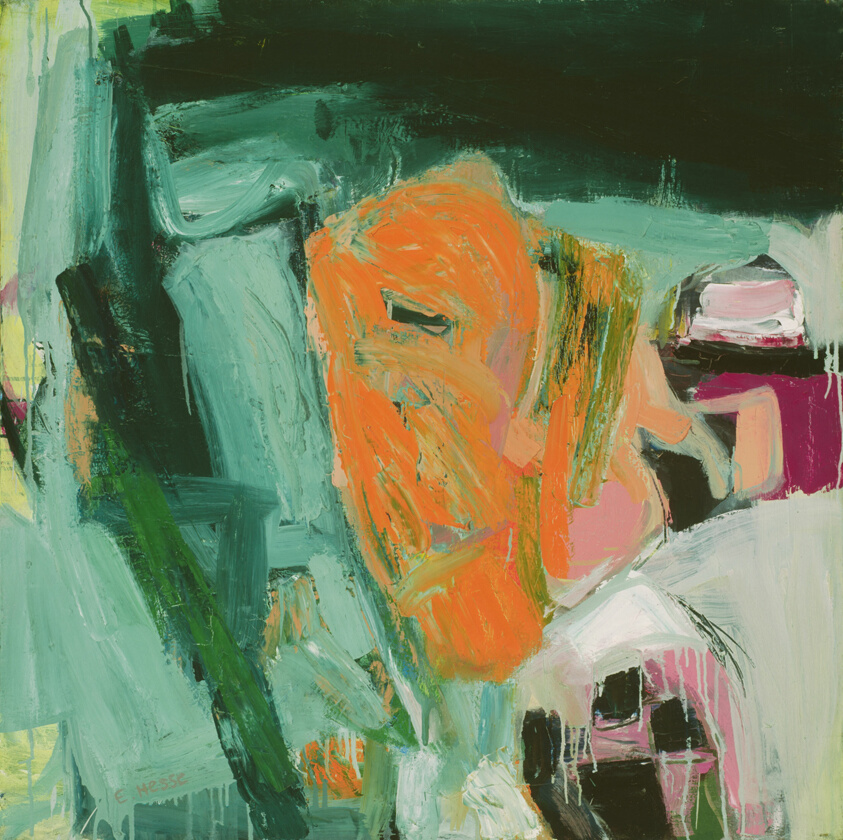
After Eva Hesse
In a depth of green
the pink emergence
of something lovely
sprouting from the eaves,
a filmlikealgae
combusting orange.
Severing field
from farmhouse.
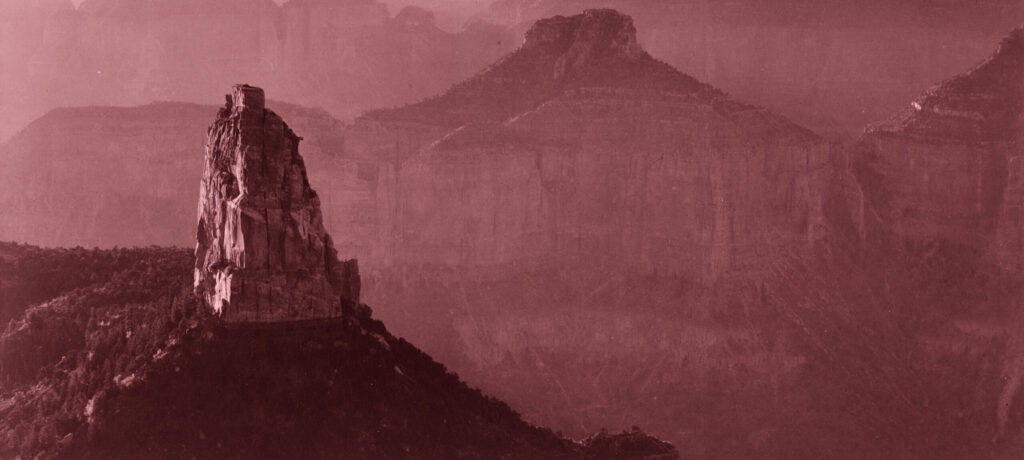
After Ansel
The hours of lead
unfold emptily
into the sublime—
Sun-eaten rockruins
stratifying memory
across centuries
of holes through
which breath escapes
-Zachary Swezy