
Razing Arizona: An Interview with W. David Oliphant
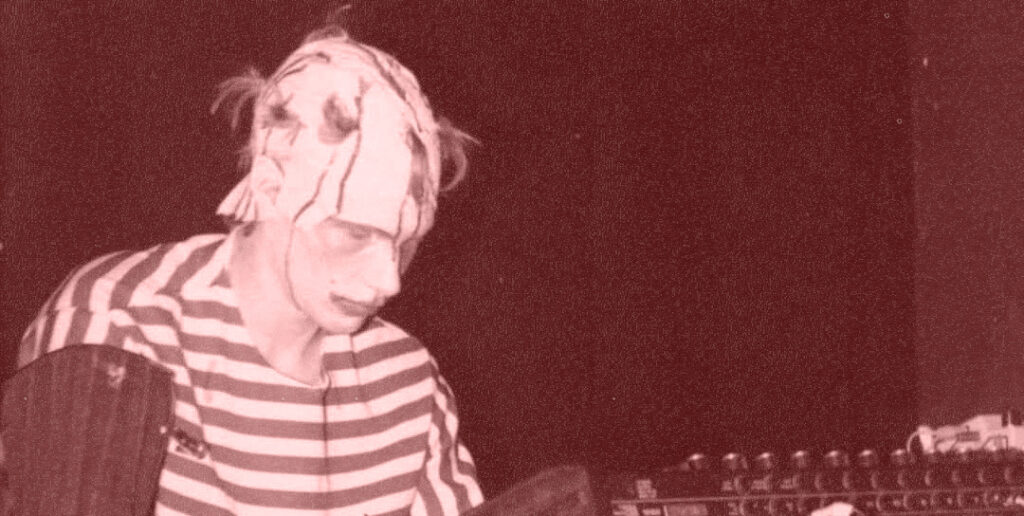

W. David Oliphant has been making recordings for five decades. He is a recurring character in Arizona’s oddly under-examined outsider music scene. His list of collaborators is formidable. For instance, in the early 80s, he collaborated with one of his scene’s few known unknowns – Alan Bishop – in a band they called Maybe Mental. And he still collaborates with the Bishop brothers to this day. His catalog is vast, [there is a rough timeline at the end] like the list of techniques and instruments he uses: tape manipulation, hand percussion, Ensoniq samplers, obscure early consumer synthesizers… on and on. Oliphant was also an early adopter of computers as production tools as far back as the ’80s. Like some of his collaborators, his themes dwell amid old mysticisms and religious iconography pulled from Asia and the ancient world. But his results are signature; expansive, often wordless, but suffused with wit, and preserved in surprising sonic clarity. He told me that he witnessed the birth of Industrial music with a mix of interest and annoyance. Since the 1970s, he and his list of collaborators quietly forged an alternate path through and out of previous pop forms, while, as best as possible, eschewing worldly conceits.
I conducted the interview in text and edited it lightly for punctuation and clarity. [Square brackets are my own]
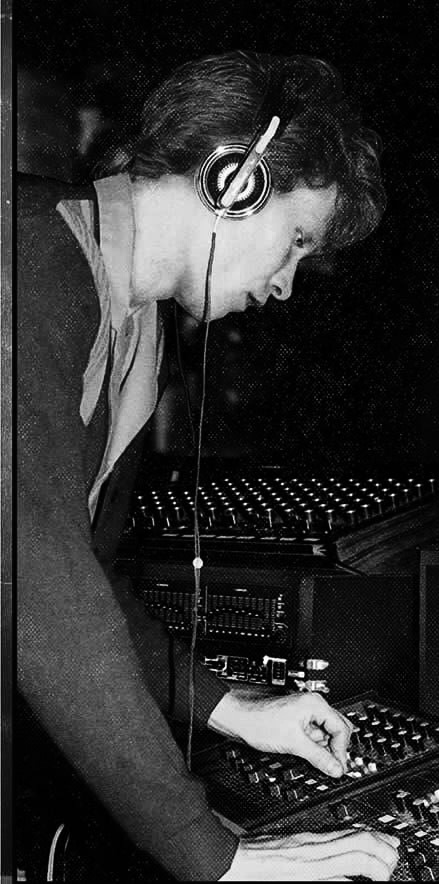
Forrest: I’m curious about the beginnings of your technical approach. Could you describe how you got started and what moved you toward the kind of equipment you use?
W David Oliphant: I had hippy babysitters that exposed me to The Mothers of Invention, Silver Apples, along with all the then-current rock stuff (late 60’s). I also had a 6th-grade music teacher that believed we should learn about classical music and contemporary composers. She let me take home albums from Stockhausen, Morton Subotnick, and other such racket makers. This fueled my sonic thirst for seeking out whatever next and new thing I could find. Music from around the world, prog rock, electronic, DIY, and anything that wasn’t what I perceived to be ‘normal’ rock music were my focus. I started out with a cassette deck, a reel-to-reel, and a microphone. So, I started gathering primitive percussion instruments, pots and pans, and miscellaneous junk, some homemade stringed instruments, along with ‘field recordings’ (or ‘found tapes’ which sounds way cooler to me). This was 1978ish. I was 21 then. I was living in Flagstaff, AZ. The university had an independent synthesizer study course at the time. I took this class the summer of ’79, which meant I took home an AKS Synthi for 3 months. That is when I actually started making my own music. In 1979, I received a bit of money from an aunt that I used to build a P.A.I.A modular synth. This was my first ‘real’ instrument, along with the recording process itself, tapes, loops…
Forrest: Was there some abundance of obscure records in Flagstaff. Were there other people with similar interests in your periphery?
WDO: Flagstaff has a large University, so there were a few record stores that had all the current cool stuff. That’s where I found Chrome and Pere Ubu. The Residents and Ralph Records material was through mail order. I have forgotten the names, but there were some good ‘Eurock’ zines that were useful in the quest for new and weird music. The culture in Flagstaff then was heavy disco, country, and a little new wave. I grew up in Phoenix, lived in Flag ‘78-’80, then back to Phoenix until 2017. Then I moved here to Bisbee, AZ.
Forrest: Mysticism pervades your work. Could I ask for an account of your progression through that?
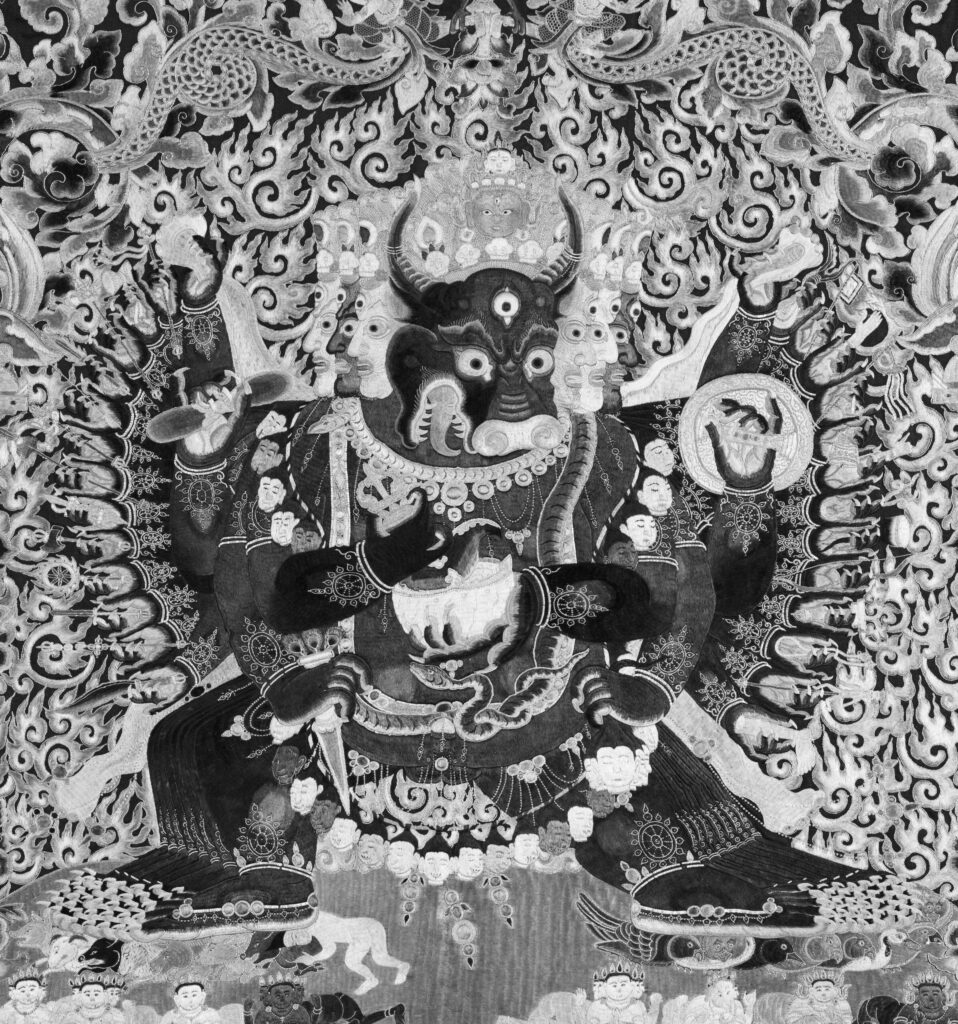
WDO: I have a bit of synesthesia with sound, touch, and vision. Music and audio in general has always triggered an internal visual component. Early in life, I developed kind of an inside and outside personality. Outside, I enjoyed the world and people, and interacting with the environment. Inside, literally at home, I found listening to music and the radio preferable to interacting with my family. Sound became my conduit for working through – releasing my emotions and imagining other worlds. I was born and raised in a traditional Quaker environment. Our church service was a silent meeting. All the above developed into my feeling that there was some kind of potential power through sound to connect to ‘higher’ levels of awareness. There are many ways I could talk about this side of my creative approach. In brief, I studied a wide range of new age and magick writings, eventually leading me to Tibetan Buddhism; Dzogchen, to be specific. The supposed original written teaching for Dzogchen is roughly translated as ‘The All Penetrating Sound Tantra’, ‘Reverberation of Sound Tantra’.
Forrest: I notice you wrote in some of your album credits that tracks were recorded straight through in one take. Do you think this act of live recording elicits some sort of greater awareness?
WDO: Short answer, yes, but I was mainly just pointing out that there were no overdubs.
Forrest: I’m curious about the longer answer. The idea of free music as a conduit has been important to me.
WDO: In 1980, I bought an LP by Stockhausen, one from his ‘Seven Days’ project. The instruction for playing this part was only to play when you were not thinking. This was an act beyond my comprehension at that time, but it inspired me to try… I had experienced some of those odd moments where you are improvising with others and get lost in the moment, almost like an out-of-body experience or dreaming. From my perspective now, I see this as the same basic goal as Dzogchen, that is, to remain in a ‘non-dual’ state 24/7. Except for some of the early earworm music I made with Maybe Mental, most everything I do is based on improvisation. I have always felt like what I was creating already existed and was just in need of an outlet into our 3D world. The first Life Garden album was mostly composed. Everything after that completely improvised. In general, I try and set up a range of possibilities. If working collaboratively, I tailor these to whoever is part of the project. The Beyond All Defects album with Richard Bishop is a perfect example of this. That was 100% improvised, and all live without overdubs. Maintaining the non-dual thinking approach to live improvisation is always my intention.
Forrest: How is it achieved?
WDO: There are infinite ways to detach, and somewhat unique to each person. Whatever thought comes to mind, be loosely aware of it and do not follow it into a rabbit hole or reject it into another rabbit hole. If you find yourself stuck in a loop with some thought, back off and ask why? What energy does this train of thought hold over me? Some folks like the idea of forgiving yourself. It’s sorta like that, but forgiving suggests you did something wrong. Over the grand scheme of life, there are things that happened leading to this moment. We each individually have all kinds of unresolved happy and sad moments and periods of time. They all lead to here. Accept, let go of, work through it with line-by-line questioning, always returning to the “let go of it” part as some new thought comes in. Over time with practice, it becomes more and more instantaneous, freeing up some clear headspace for a moment longer than the day, week, month before. The in-between moments is what Stockhausen was instructing the musicians to achieve for the 7-day album mentioned earlier. That is the “not thinking” moment. This could all be described differently, but this is how I personally have come to see this “let go of” nonsense.
Forrest: Do you think that music progresses, and if so, is avant-garde music still progressing? Is that something that preoccupies your approach to music?
WDO: Great question. There are a few individuals from the past that, in my opinion, have greatly influenced ‘new’ musics. Consider Beefheart’s Trout Mask Replica. Is it possible that someone could in today’s world create the equivalent of that monster? I don’t mean that sound through today’s technology… I mean the effect that music had on so many. This was sort of the main premise for the Bastard Kings of Samadhi project. I wondered what the fuck would Beefheart create today if he used a computer with today’s VST instruments. I don’t claim to have achieved this, but it’s been a lot of fun.
Forrest: His technique of writing is important to me: automatic writing or fast improvisation with someone recording and editing the transcript into something re-playable. I wonder whether you wrote in a similar way, is what you mean? But I also want to comment that his hippy abuse system of songwriting is harder to reproduce today. It seems like so much of innovation is reliant on cheap real estate prices. He could keep a band in a house, living together dirt cheap, making nothing but that album. How do you think solo approaches differ?
WDO: I read his (maybe unpublished) book online a few years back. Fascinating. I had no idea that psychedelics were so involved with the evolution of their sound. His book made me realize that, minus the drugs and psychological abuse, I have always worked with others as an extension of my hands, so to speak. I don’t quite understand the question ‘How do you think solo approaches differ?’
Forrest: Well, for instance, Beefheart playing piano and Drumbo writing it down, editing, then feeding it as notation to musicians is three stages of human reactions and refinement. Compared to Beethoven writing sheet music while deaf, it is intensely collaborative. I’m wondering—if you want to ignore that little puzzle—how you think individual musicians working alone produce different results. Or if it’s possible to make something just as alive alone?
WDO: Solo leaves everything open to whatever abilities you have. For me, once you add others into the mix, there is a give and take. When I am preparing music in advance for a collaboration, I have to leave space for others. Sometimes I have a specific idea for them, usually more of a notion. That is about as far as my ‘writing’ goes. The way my system is set up definitely feels alive to me. I have a few small MIDI keyboards that, within the DAW, have all kinds of subtle randomization of notes and whatnot. From one repeated note played the randomization can go from a note here and there up to spanning the whole keyboard. This setup is also why I thought of Beefheart. I am making use of loops and today’s tech, but I am still just banging on a piano connected to all these virtual players. Today’s tech replacing the translation to others part.
Forrest: When did you first use computers in your music? What programs?
WDO: 1986 Atari ST. Dr. T’s sequencing software. This is also when I bought my first sampler, the Ensoniq Mirage. Both were first used on the ‘Lotuses on Fire’ tape. Jump to 1998 – first DAW PC setup. Sound Forge and Samplitude were the main programs.
Forrest: Why did you begin to use a computer? Do you think the software has improved in terms of capacity for free expression? It seems a difficult way to improvise.
WDO: The first Atari computer was just for the sequencing capability. MIDI was built into the computer itself and affordable. I had a 1/2″ reel-to-reel 8-track tape recorder at that time. With the Atari and Dr. T’s software, I was able to overdub using one of the 8 tracks as a control interface, so complex sequences for various instruments could be easily (for the time) in perfect sync. This was used on both the Lotuses on Fire project and the first Life Garden release, ‘Tapestry…’. All the computers I have used since then have been for both recording and as a complex VST instrument. Once the live looping was properly integrated into the DAW setup, improvising became pretty easy.
Forrest: How did you get Life Garden recordings to sound so clean in the early ’90s? Did you have nice mics and a good mixer?
WDO: My creative goal was always the completed recording. I was a huge Eno fan and was inspired by his claim that the studio was his instrument. I was not interested in the limitations of what could be done in a live setting, so I too considered the studio to be my instrument… Physical tape loops, field recordings, and ‘treatments’ to modify and change sounds. I always hoped to find the sound hidden inside the actual sounds with these treatments and tape manipulations. I started out in the late 70s with a few cassette decks and a 7″ reel-to-reel. In 1981, I bought a Teac 7″ 4-track reel-to-reel and used that for all my recordings until 1985. At that time, I made an attempt to put together an 8-track studio (Teac 10″ 1/2″ reel to reel) and quickly realized that I didn’t enjoy recording other bands. The 8-track was used up through 1991 – the last project on that was the first [Life Garden] Tapestry CD. The first project was [Maybe Mental’s] ‘To Cease Burning’. From 1991+ I used a combination of cassette and DATs to record our live performances, with each released tape or CD using a different multi-track setup. Life Garden at that point was a big, messy electro-acoustic quartet. By this time, I was tired of the limitations I had with the Ensoniq Mirage sampler and having to rely on backing tapes for live shows. We had been gathering… indigenous instruments since the early 80’s, along with then-current digital delays with looping options and various multi-effects processors, so this quickly evolved into an all acoustic setup with digital effects. All four of us had our own batch of instruments and effects feed directly to me, resulting in the final stereo mix. Everything was improvised, but themes and textures started to form a kind of unspecified score over time. [Life Garden’s] Pry Open… was recorded sound on sound style using multiple DATs to record on, then played back from one while playing live on top of it, recording onto a 2nd DAT. The final mix used 3 DATs for the final CD. [On Life Garden’s] ‘Seed’ we used a friend’s 1/2″ 16-track, and Ahitanamin was recorded on an Alesis ADAT. After that, the band faded away, and I slowly migrated to DAW recording.
Forrest: You’ve worked with members of Sun City Girls, and certainly in your own work, I wonder how you all simultaneously got so interested in various cultures in Asia. Was there a general interest in the Beats? Does that explain the influence of Buddhism?
WDO: My interest in indigenous musics began in high school. Folkways records and [Nonesuch] were great for all manner of weirdness… Local libraries were a great resource for these. Once I stumbled across some traditional Tibetan ritual musics, I became obsessed with the uniqueness of the chant and long horns… By the time I met Alan and Rick, we each had our collections and shared them. Once Alan and Rick started their world travels, Alan would bring back his recordings from the local radio stations, leading to the Sublime Frequencies style. This was 1982-83.
Forrest: I believe we are coming to the end of the interview. That is, unless you feel there is some great realm of your thoughts and experiences I am neglecting.
WDO: Since 1991 or so, I have often used the idea of what a genre of music might sound like as created by an alternative earth(s). For me, not the group, post ‘Tapestry’ Life Garden was based on this concept of ‘what if’ – what if this ritualistic music was created in another dimension, on another earth like world… where things are similar but strange. One other main LG influence, again just for myself, was the idea that there is a single sacred sound that has been broken apart and scattered across dimensions and various worlds. What would that sound like if reassembled? I still use this concept today like an intradimensional shortwave radio, and all I am doing is re-transmitting these sounds into our world…
Rough Chronology of WDO projects:
Barely Bending – Solo and early collaboration with Ed Cahall, using found objects, tapes, AKS Synthi, tape loops, etc. in Flagstaff. AZ: 1979-1980
The Invalid Ballet Co.: Group and solo punk noise ambient experiments: 1980-1981 Destruction: Solo to begin, and then as a group: 1981 – early 1982.
Dalis Daughter: Solo: 1981 – 1984 // Then morphed into Maybe Mental with Doug Clark (Mighty Sphincter) and Alan Bishop: 1982-1987
The Amnesia Quartet: First use of sampler: 1987 – 1988.
Life Garden: 1989 – 1999
Amnesia Quartet (2nd version): Jazz noise house band for local Phx performance space ‘Metropophobobia’: 1994-1999
Various solo and collaborations: 2000 – Current
Rag Dun: solo with a more ambient-cosmic focus: 2016 – 2021
Bastard Kings of Samadhi: current main solo project: 2018 – Current