
New York Minute: a litmag on September 11th

dyingdays.com was an online writing micro-community founded in the fall of the year 2000. Billed as “a place for people who think too much,” the site seems to have been a hub for a wide range of moody amateur writers to vent, as evidenced by the highly personal tone of their accepted submissions. In its first few months of existence, dyingdays mostly put up writing by the members of their unusually large masthead, including chief editor Paul Hughes, a writer of speculative fiction and fan of Samuel Delany, who managed all submissions from his email inbox. As time went on, they began to expand their scope to include guest writers, a roster that Paul lists as including “best-selling poets, world-renowned speculative fiction authors, disgruntled housewives, suicidal teenagers, executives, drug addicts, soldiers…” This infusion of new blood didn’t detract from the established timbre, as the site at this nascent point still resembled something like an early version of Livejournal, rather than what we would understand now as an online “litmag.”
This all changed on the morning of September 11th, 2001. Paul’s inbox was suddenly flooded with new submissions, both from site regulars, and from people who had never before written for dyingdays, who had never written anything publicly at all, an outpouring of extremely raw emotions. These emails trickled in over the next few weeks, with some of them ending up posted on the site directly, while the rest were held onto for safekeeping. After just two months, on November 26th 2001, Paul released a print copy of submissions received on the morning of 9/11, as well as the proceeding weeks, in the raw form in which they arrived. His stated goal was to craft a literary time capsule, “a documentation of a distinct moment in our lives, a revelation of the emotional atmosphere of this uncertain time.” The book is fittingly titled “to wound the autumnal city,” borrowing from the first line of Delany’s “Dhalgren.” It is given a single dedication: “to those who fell…and those who are still falling.”
The anthology is roughly split up into three sections: writings from the first day or within the first week, writings made one week later, and writings made one month later. Many of the works in the first section follow a similar diaristic pattern, a similar set of reflections, reactions, purgations. Several accounts of watching the news in college dorms, several admissions of fear, of anger, of trepidation. A few writers call for swift retaliation in the Middle East, a few decry the notion of further aggression, others grieve over the very existence of terrorism in the world. Many take great umbrage at broadcasts of Palestinians cheering and celebrating, making a point to mention it as many times as possible, and to condemn it as “too far.” Almost all call for a nebulously defined “unity,” specifically amongst American citizens.
There are a handful of submissions that stray from this path, showing something more inchoate. One writer admits that as the attacks were happening, she felt annoyed that every channel on her satellite TV network was airing the news, as she wanted a distraction from the entire situation. Another ruminates on the concept of jihad, a term he had only learned recently though playing “Vampire: The Masquerade.” He uses his piece to compare real-life terrorist plots and geopolitical intrigue to the internal mechanisms of the game. The most fascinating pieces in this first section are penned by Mohamed Suliman Suliman, an Arab man who seemed to be dyingdays regular “Middle Eastern affairs” contributor. In his first submission “The End of Times,” he mourns for the women and children affected by the plane strikes, while condemning the rest to “burn in hell”. He then explains that he has been diligently monitoring the situation for months and has been predicting an attack on American soil, he rules out any involvement from Saddam Hussein or the PLO, and correctly identifies that the American response will be indiscriminate and pointless. He reveals that he has been relaying this information to the FBI and CIA, and even claims to have received a call from the White House “after one very disturbed letter I sent to President Bush.” He states that he will continue to write letters to the President, in the hopes of making some sort of inroads and to advocate for cogent further action.
A bit later in the collection, Paul makes the bold editorial decision to run Mohamed’s post-9/11 letters to the White House, completely untouched from their original form, giving us an incredibly intimate glimpse into his psyche. In his first letter, Mohamed both expresses deep fear that “more idiots may attempt to follow in the footsteps of the ungodly actions that occurred on Tuesday” and lambasts the administration for their foreign policy decisions. He includes the full body of an email penned months prior, where he warns of an attack on the scale of Pearl Harbor. The rest of the letter is an impassioned plea for government employment; he begs to be utilized by any intelligence service who will take him as a translator, informant, or any other role that would avoid taking life directly. He explains that he was willing to fill out an FBI job application, but ran into a roadblock when he got to the section regarding drug use, as he has “been smoking pot three times a day since ‘98.” He extols the virtue of marijuana, then sends a link directly to the dyingdays website as an invitation to the presidential cabinet to read his unfiltered thoughts. The second letter published in the anthology takes a more unhinged and frantic tone, as Mohamed cannot emotionally process the reality of what has happened.. In a striking passage, he writes the following:
“I would weep and apologize and blame Jews and point fingers, but I know from history that does nothing, absolutely nothing. After I received no response when I wrote you, and please, know that by saying you I mean the whole entire cabinet, I was upset. I was very upset. Now here is the major difference between Arabs like me and Arabs hijacking planes, I didn’t harm a soul. I smoked a lot of pot, but I just waited. I wrote a lot of angry poetry too, played this crazy game called ‘hit-man’ on the 24th floor of a 40 story building in downtown Miami, but I didn’t go around screaming for blood. Why? Because I am Muslim, and as a Muslim, I know that Allah wills for things to be this way.”
Mohamed’s last piece published in the collection is entitled “Multiple Bangs.” In it, he reasserts his convictions against terrorism and Bin Laden, but has clearly succumbed to a gnashing nihilism, wishing for a nuclear holocaust and cursing American and Arab alike. There are no further submissions from Mohamed after the first week.
The writings in the second part of the anthology are more sedate and melancholic, as we find our newly-minted patriots struggling to adapt to a new global landscape while going about their day-to-day lives. They give blood, donate to disaster relief, fly the flag, say the pledge, all while wrestling with the fact that their personal issues have not vanished in the midst of this “solidarity.” The same woman who wrote about her gripes with 24/7 television coverage in the first section pens a follow-up “Apologies,” in which she bemoans the fact that she can only think about her recent break-up even just one week later. She also continues to complain about the non-stop television coverage. First day writers who were baying for blood now find their rage cooled, as they start to come to grips with the reality of impending bombings and the possibility of an endless war. A few openly share their reservations with a national climate of jingoism, sour sentiments expressed towards Bin Laden bullseye bumper stickers, violent rhetoric towards peace activists, fomenting racial tensions.
The third section is the shortest, and the most haphazard. The thoughtful minority of the second section have become disillusioned entirely, many sinking into an ambivalent malaise, not condoning looming military action, but not doing much to speak out against it or stop it. The more rancorous bunch have only strengthened their resolve, and write glowingly about the initial bombing campaigns in Afghanistan. There is a clear inward turn throughout the section, as multiple writers begin to frame things generationally, comparing themselves to their grandparents during WWII, or their parents during Vietnam. There is also palpable paranoia; one piece mentions anthrax attacks, another written by an Iowa professor takes the form of a fantastical attack on the English department of his school, imagined as he watched a low-flying plane overhead days before. A standout piece from this section is “at the foot of his grave,” in which a mourning woman goes to pay her respects at a tombstone. Within the context of the anthology, this would appear to be a direct reference to the attacks, but the single line of “He had never wanted to become a statistic…” poisons the text, making the cause of death more ambiguous, possibly self-inflicted, murkier.
The throughline between all of these sections, and across all of the submissions in general, is a naked honesty and transparency that makes even the milquetoast offerings compelling to read. There is a shocking sincerity in these writings, fluttering on the edge of naivety. There is a piece in the first section entitled “Holy Flirking Schnit,” that opens with the lines “Nobody can deny that those same 3 words, or variations thereof, went through their heads or vocal chords at some point on Tuesday, 9/11.” One writer lists the full lyrics of John Lennon’s “Imagine,” another REM’s “It’s the End of the World as We Know It.” The people represented in this anthology aren’t overly preoccupied with how their thoughts and feelings will come across, and none of them take an ironic stance or feign detachment. They all seem deeply affected by the events that transpired, even though the vast majority of participants do not live in New York and did not lose anyone in the attacks (ironically, the only writer to have lost family was Mohamed Suliman, whose two cousins worked as janitorial staff in the World Trade Center). The effect is strengthened by Paul’s “unediting” methodology; he makes no efforts to fix punctuation or spelling, and doesn’t seem to have cut any content from the selections presented, opting to let them stand on their own, warts and all.
There is a flipside to this unfettered candor that isn’t immediately apparent in the texts provided, running as a subtle undercurrent throughout the collection, especially as it gets into the later sections. There are a few instances in which it is made more explicit, such as in this poem, published in both the anthology and on the website, which blurs the lines between the author’s own point of view, and that of the people trapped in the colossal blender of the South Tower as it collapsed. There are more examples of it on the website, as there are entries within the date range of the project that mysteriously stayed on the cutting room floor. It can be found in the dyingdays archives, both in the years before and after 2001. What I refer to, is a latent destructive impulse that undergirds the whole project, pointed both outwardly and inwardly, which seems to plague the minds of the site’s Gen X contributors in particular. dyingdays was populated by people of all walks struggling in their relationships, careers, in their lives in general, but there is a real aimlessness amongst the twentysomethings that easily makes way for hopelessness, despondancy, suicidality.
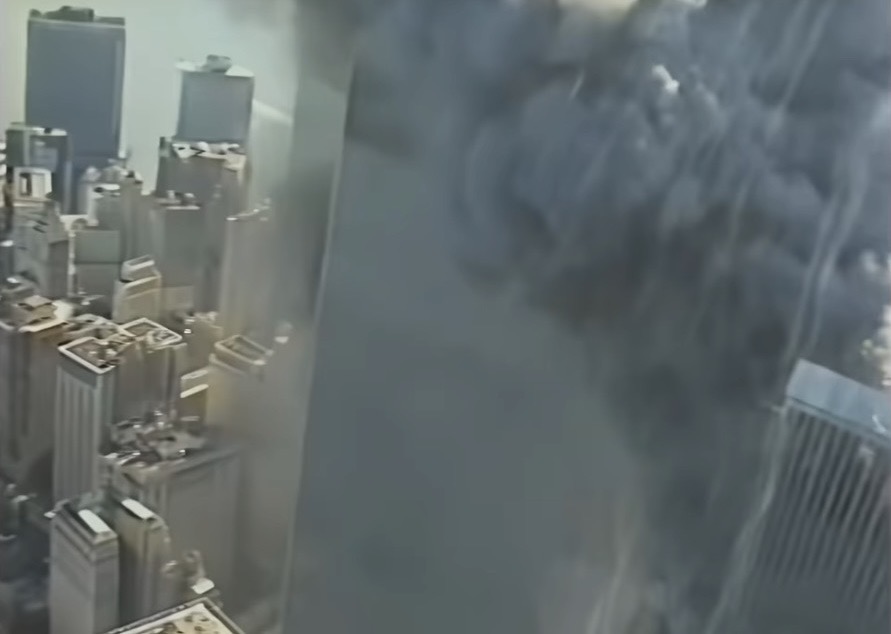
This thread is made most apparent in Paul Hughes’ own writing for the collection, of which there are many examples, spread across the three sections. Paul’s first piece is emotionally raw to the point of histrionics; he simultaneously describes having a phantom limb sensation of “physically feeling the towers fall” while sobbing on the phone to his friends, as he then baldly proclaims that he “would eliminate Jerusalem in nuclear light” if given the chance, ostensibly as a response to the attacks(?) He bounces between these poles throughout the piece, but the real inner workings are revealed near the end, as he describes his own second-guessing of the plot of his newest novel:
“I remember coming up with that idea the first time and thinking how cool it was.. How awesome it would be if D.C. were destroyed by a nuke, throwing the nation into chaos and war. What a limit experience! What good theatre. Imagine the possibilities. I never suspected that I would live through a day like 9-11-01. I never could have known that in the space of several hours I would watch such horrific events unfold live on television. The falling…”
Paul’s following pieces share the same internal conflict, but with more cracks starting to show. He leads off his follow-up piece “18 September 2001: back to nothing” with the line “i was just starting to become a person that i liked again.” He then goes on to draw a tortured comparison between the global terrorism of 2001 and the domestic “terrorism” of his own internecine family feud in 1998, a bizarre tale that involves his aunt injecting penicillin into his father’s cows to disrupt their rural Pennsylvania dairy farm. He clings to the idea that “it would be simple and satisfying to turn afghanistan into blackened glass,” while also acknowledging that as the shock and awe wears off, he finds himself at risk of slipping back into old patterns of drinking and womanizing, back on the long march towards a slow death. Paul’s piece in the third section, written a month after 9/11, acts as a depressing coda to his immediate story. He intimates that the long-distance relationship mentioned in his first piece has now come to an end, and he sees no way to move forward, save to “re-initiate the process that i started years ago but paused a moment: self destruction.” He makes the decision to go back to the bar, to pick up smoking again, to treat women poorly, all while realizing that it is all entirely within his control, that he can’t pin his problems on the events of September 11th.
My read of Paul may come across as uncharitable, and it is a little, but I don’t entirely dislike him; I appreciate his frankness, and even more so his foresight, as this anthology is one of a kind in the annals of literary magazines. I don’t think that Paul’s testimony throughout his 9/11 writing is particularly unique, especially as it relates to his adopted patriotic fervor. I don’t want to insinuate that Paul and his peers were overcorrecting their own self-and-societically-destructive impulses by waving the banner high, but there is a strong case to be made that at least some of them were, judging from the contents of their confessional writing. And personal judgement aside, it does make perfect sense: you fantasize about a world where the suits and stiffs in their office buildings get reduced to a gory pulp, so what happens when you are presented with it? Or conversely, you don’t feel like your life has any value, and want to die in a blaze of glory, to have your life mean something. What happens when you’re presented with a spectacle of mass suicide, a suicide that is not only deemed to be completely morally acceptable by American society, but that is taken as a given, as an evidently correct decision under the circumstances? A retreat into a simple, clearly-defined national identity would be easy, at least at first, and could allow you to quietly ameliorate whatever lingering guilt you had for even desiring an end to the world or an end to yourself. It would be undemanding, at least until the demands started, until war was declared, until mass surveillance was enacted, when there would be little to lose and potentially something to gain, at least something to make yourself feel a little better. A few of the writers in this collection, Paul included, at least saw the writing on the wall enough to know that it wouldn’t last, that whatever fantasies they had would be dispelled, and they would once again be put in the position of needing to make a choice, needing to make a stand. And I don’t think they were alone; it would be outside the scope of this piece (and probably a bit audacious) to make any sort of sweeping statement about an entire generational cohort, but I would invite people to read David Foster Wallace’s writing on 9/11 from this lens, particularly the part about building jumpers.
The writing in this strange, singular collection may be cloying, it may follow the same pattern ad nauseum, but there is something truly wrenching about the best of it. My favorite piece overall is Paul’s postscript, entitled “don’t look down,” as this is where the entire collection is stripped down to the muscle. It is a frantic back-and-forth between Paul and his own thoughts, which are marked in the text with italics. He is now smoking a pack of cigarettes a day, and has flown into a tailspin of terror, convinced that global biological warfare is right around the corner. In his thoughts, he lambasts the people around him for being worried about his wellbeing, and argues with them in his head, trying to convince them that nothing is wrong. He later reveals that “not a day has gone by since 9-11 that i’ve not wanted to end my own life at some point.” He speculates that the passengers of Flight 11 could have cured AIDS or written the next great American novel, and imagines what his own life could have been like on the morning of the 11th. He is gripped by nightmares, visions of boxcutters ripping his chest, of fires, of falling, endless falling.
I’m saying this all with my own vantage point in time and history. Although I was a child when the attacks happened, I suspect I harbor my own millennial pathologies regarding the incident. I tried writing out my own memories of 9/11, and like the pieces in the collection, it became more of a reflection of myself and my own issues. It felt cathartic to write it, and it may be cathartic for someone to read.
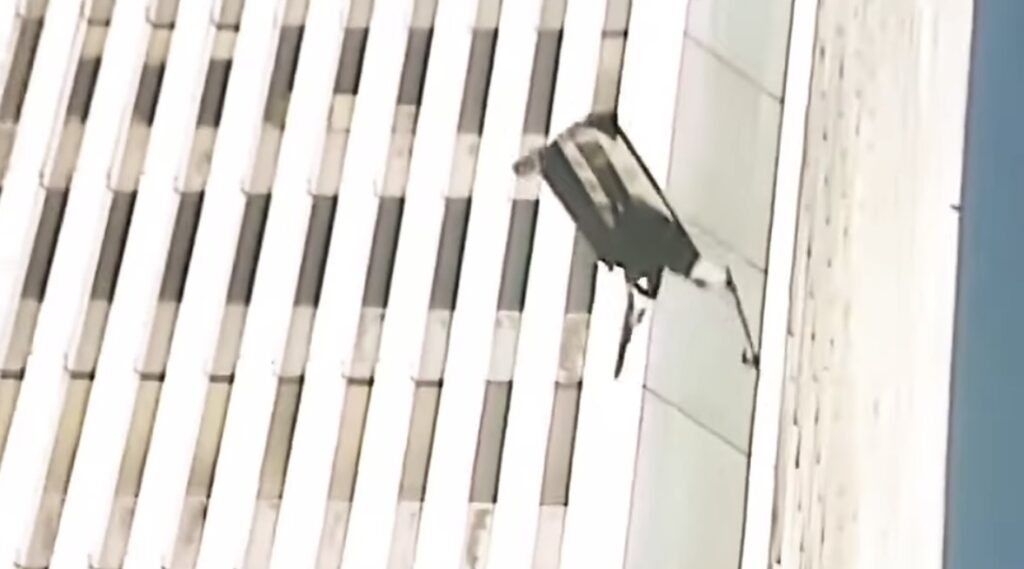
I was ten years old on September 11th, 2001. I had the first pang of suicidal ideation the year prior, when I vividly imagined swan diving off the roof of my elementary school onto the concrete below. My mom screamed at me to come inside the house, and I ran in right as the second plane hit the South Tower. She gripped her hands to her mouth and made a sound like a balloon deflating when the first jumper glimmered on screen, before the camera cut away. In times like this, you’re allowed to do that. I watched intently from that point on, unsure of how to react, what to say, what to do. I just kept watching to see if I could catch another glimpse. In times like this, you’re allowed to do that. Watched, and watched, waiting to see if another body would fall, feeling sick about it the whole time, but watching with intent. I had moved to Arizona two years prior, I stayed with my grandparents for some of that time. I would lie in their bed as they played The Eagles “Hell Freezes Over” live recording on their CD player. I would ask them to play “New York Minute” over and over, they both found it funny that I had such a fondness for this chintzy, 80s-era FM synth crooner, rather than the breezy rockers they remembered. I was more fixated on the lyrics: a song about a man who jumps in front of a city subway, about how your life can end in an instant. Weeks into October 2001, things felt different, in a way that made me confused. My mom started talking about things like “civic duty” while showing me a chain email of crumbled buildings, and pictures of men in mid-air falling to their deaths as Enya played through tinny speakers. One of the pictures ended up on the cover of Time Magazine. When she was asleep, I would use the computer to find videos of people falling, and where I could find none, I would find other accidents; escalators, shopping mall collapses, heads caving in, limbs falling off. It was compulsive, and would usually leave me feeling bad, but it would also take the edge off of a competing compulsion, the one that led me in my imagination to the edge of a bridge. As I got older, as years went on, there was still this lingering confusion, this frustration with all the adults around me. They would show us documentaries about 9/11 in class, showing footage of the first plane hitting the towers and the sound of human bodies splattering on the concrete. My mom would get upset with me about what I was finding on the computer. Why was it bad when I was doing it? I actually want to die. I want to know what it would be like. Is there something wrong with that? The first time I used YouTube, I found a 9/11 tribute video, set to “New York Minute.” It made me feel insane, because it was supposed to be this solemn tribute, but during the chorus, it had close up shots of people hurtling end over end towards the ground. Why would you even include that? That’s the only reason people are even going to watch this, this is what they’re actually here for. It can’t just be me, right? I didn’t talk about this with anyone else for a while, until I found other people who felt the same way, who had the same problems. Some of them got better and stopped thinking about it as much, some of them still watched videos of people dying on the computer. Some of them jumped off of a bridge. I don’t think about it as much anymore, but I sometimes find strange memorabilia around 9/11 and think about buying it. That’s how I found this book to begin with. I saw recently that there is an entire online community dedicated to finding and archiving amateur footage of 9/11. They all claim that it’s for the purposes of honoring the dead, of commemorating the moment as a tragedy, but I have a feeling that most of them came to this point looking for videos of 9/11 jumpers. There was a rumor about a video that showed bodies at the moment of impact on the plaza grounds, dissolving into pink mist. I know it’s fake, but I only know that because if it were real, I would have already seen it by now. I think I am doing better now. I don’t feel as scared, I don’t feel as angry. I don’t have the immediate impulse, a lot of the background noise has cleared up. I don’t think that I’m falling, but I know that it would be easy to slip.