
Facelessness: on Treriksröset’s Untitled (2019)

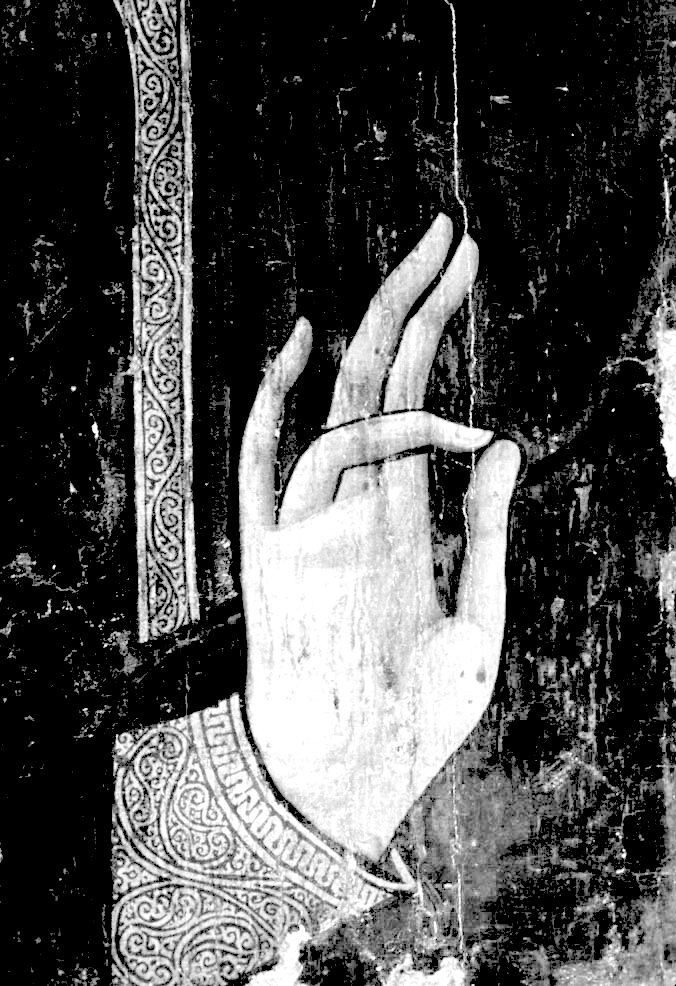
Tommy Carlsson recorded his first release as Treriksröset, Sexregler, in 2002, a few weeks after the birth of his son. “All instruments as my cock,” according to the liner notes. Like most of what would follow, it was recorded live to tape, with minimal editing. He doesn’t find time to work on his craft very often; when he can, once every few months, maybe, sometimes longer, he’ll take a couple days off work, set up some equipment in a spare corner of the apartment, and go at it until he’s produced something he can respect. Otherwise, life keeps him busy. He’s a father, he’s not rich, he has responsibilities. In the almost quarter century since Sexregler, he’s put out another fifteen or so releases, give or take some stray singles and EPs – for a harsh noise project, which is what Treriksröset is, this is anything but prolific. By his own admission, he’s not very productive, but it’s clear that this stems from something other than apathy. “I think a lot of people should slow down their pace,” he says in an interview with Oskar Brummel. It is worth noting here that there hasn’t been a Treriksröset release since 2020. Later in that same interview, the topic turns to religion. Although identifying as an atheist for most of his life, “more recently,” he says, he had an awakening. He had been “really wrong [for] many, many years.” He’s a believer now. He prays to the “one true God.” In 2019, he put out an album, his first non-reissue LP, called Kristen musik från Rågsved (“Christian Music from Rågsved,” a suburb of Stockholm). The cover depicts a hand raised in the gesture of benediction, a fine, sharp line drawing rendered against a pale gold background. It’s an excellent record, one of the major harsh noise releases of the last ten years, in my opinion, but it’s not the one I’m really interested in talking about here. No, the one which I’m interested in is the one which immediately preceded it, earlier that same year, an untitled, self-released c62 cassette with a featureless black cover. The material (two side-long tracks, both also untitled) was recorded back in 2014-15, and so likely precedes his conversion. The decision to release it, however, certainly couldn’t have. I find this fascinating, because it’s one of the most infernal noise releases I’ve ever heard. It sounds like having your skin taken off, like being impaled on long skewers, like drowning in blood and boiling fat surrounded by leering, dancing imps. Here, then, is an artist who records live to tape with minimal editing, and says most people do too much too quickly; who (I forgot to mention earlier) never does shows funded by taxes or grants because he finds these things “very, very annoying on a personal level”, who loves God but puts out albums that sound like the very pits of Hell. What are we to make of all this? What are we to make of any of this?
Here’s one way into it, one path, certainly, among others. Consider: unlike Kristen musik från Rågsved, which, despite having been recorded years later, I can’t help but see as something like a companion piece due to release proximity, Untitled (as I’m going to be stylizing it going forwards) offers absolutely nothing in terms of thematic or conceptual entry points by which one can approach it. It has no title, no track titles, no cover art to speak of. There’s no vocals on the tracks, no legible samples. Every means by which a noise artist commonly signals what sort of frame of reference you should have going into a release is, here, totally refused. There’s functionally nothing to go off of, no way to orient yourself, no means of establishing a relation with it. It is faceless. And here’s the thing: Untitled is not a wall noise release. When you hit play on this tape you are not immediately crushed into the floor beneath a slab of crunching static à la early The Rita or The Cherry Point, both of whom Treriksröset has previously collaborated with; quite the opposite, this is an extremely dynamic, even frenetic release, brutally harsh, to be sure, but across an incredibly broad spectrum of abrasive possibility, constantly changing, constantly reconfiguring itself, never monotonous. It grinds, shrieks, screeches, rumbles, blasts you in the face; it sounds like sheets of rusted iron being dragged across a gravel lot and like a box full of lightbulbs being thrown down a steep staircase and like being held face-down in a torrent of icy water and like being held face-down in a torrent of scalding water. It has the character of a downed power line whipping across the road in a howling gale, right towards your crashed car’s broken windshield, and it has the character of brimstone raining down upon the cities of the plain and turning them to ash and rubble. Given Carlsson’s preference for direct, unedited recording, there is a real case to be made for Untitled being in some sense in the tradition of free jazz as much as anything, not so far removed, really, from the sort of chaotic extremes reached by, say, Kaoru Abe or Masayuki Takayanagi at their most fearlessly outré. A more direct comparison, though, would simply be to fire itself, to the constant shifting, flickering, morphing of flames – this is, I think, not unrelated to the tape’s aforementioned infernal affect. It is noise which feels like remaining totally conscious throughout your own total destruction and annihilation, an annihilation which it seems, somehow, will never, ever end. It feels possessed, and like that which has possessed it has no form, no shape, is just energy, or something even more primordial than that, something which cannot be named, because by the time it could be given one, it has already become something else entirely.
All of this to say, the apparent lack of a thematic framework is not, here, a framework in disguise – when I say Untitled is “faceless” I do not mean it is “about facelessness,” I do not mean it is about the enactment of negation as such, the way, say, Vomir’s work is. No. I mean it is faceless. It is not “about” anything. It does not explain itself. It lives and moves and breathes, but entirely on its own terms, entirely for its own purposes. It is sound qua sound, being without identity, bare existence, maya. Or perhaps I have it all wrong. Perhaps it does have a face, which it simply does not turn towards us. Elgar’s Dream of Gerontius, you might remember, structures its entire ninety-odd minute orchestral drama around a single moment, the moment in which God looks upon Gerontius, and judges him. The score instructs that in this moment “every instrument exert its fullest force” – the result of this instruction is an awesome, terrible sound; overwhelming in a way for which there is little comparison in the Western Classical canon, but which must be, nonetheless, obviously, nothing but the faintest shadow of that which it seeks to represent, for the simple reason that one can hear it at all, and afterwards leave the concert hall calmly, and have a quiet dinner with one’s friends, and return to one’s ordinary life. Perhaps this is what Untitled is, then, perhaps this is how we can understand it, the devoutness of its creator and the profaneness which marks it to its core; perhaps it is, very approximately, the sound of standing before God, and Him never looking at you.